Table of Contents
-
Psychological Challenges of Immigration and Barriers to Receiving Help
-
What Is Online Counseling and How Does It Work?
-
Access to Persian-Speaking Counselors; A Bridge to Deeper Understanding
-
Time and Location Flexibility; Counseling Anywhere in the World
-
Cost Reduction and Economic Savings
-
Privacy Protection and Reducing Social Stigma
-
Psychological Support in Crisis and Emergency Situations
-
Diversity of Services and Therapeutic Approaches
-
Therapyta; Specialized Support for Iranian Immigrants
-
Conclusion
1. Psychological Challenges of Immigration and Barriers to Receiving Help
Immigration is an experience that can be simultaneously sweet and bitter. On one hand, new opportunities, bright prospects, and hope for a better future form the main motivations for immigration. On the other hand, this winding path is accompanied by deep psychological challenges that affect many immigrants. Longing for family and friends, feelings of loneliness and isolation in an unfamiliar environment, pressure to succeed and adapt to a new culture, language barriers, economic and political concerns, identity crisis and the feeling of dual belonging—all are factors that can lead to anxiety, depression, reduced self-confidence, and even physical disorders.
Despite these challenges, many immigrants are deprived of professional help. One of the most important barriers is the lack of Persian-language counseling resources. Expressing deep and complex emotions in a language other than one's mother tongue is difficult and even impossible for many immigrants. They need a safe space and a language rooted in their culture and identity to talk about their concerns and feelings. The high cost of healthcare services in many host countries is also a serious barrier. In some countries, the cost of a single in-person counseling session can be prohibitive for many immigrants, especially in the early years of immigration. Time and geographical limitations, such as long distances to counseling centers or conflicts with work and study schedules, are other common obstacles. Additionally, the social stigma associated with visiting a psychologist in some cultures prevents many immigrants from seeking professional help, as they fear being judged or blamed. These barriers, combined, deprive a significant portion of immigrants of the psychological support they need and endanger their quality of life and mental health. Online counseling, as an innovative solution, has removed many of these barriers and opened a new window to receiving professional help.
2. What Is Online Counseling and How Does It Work?
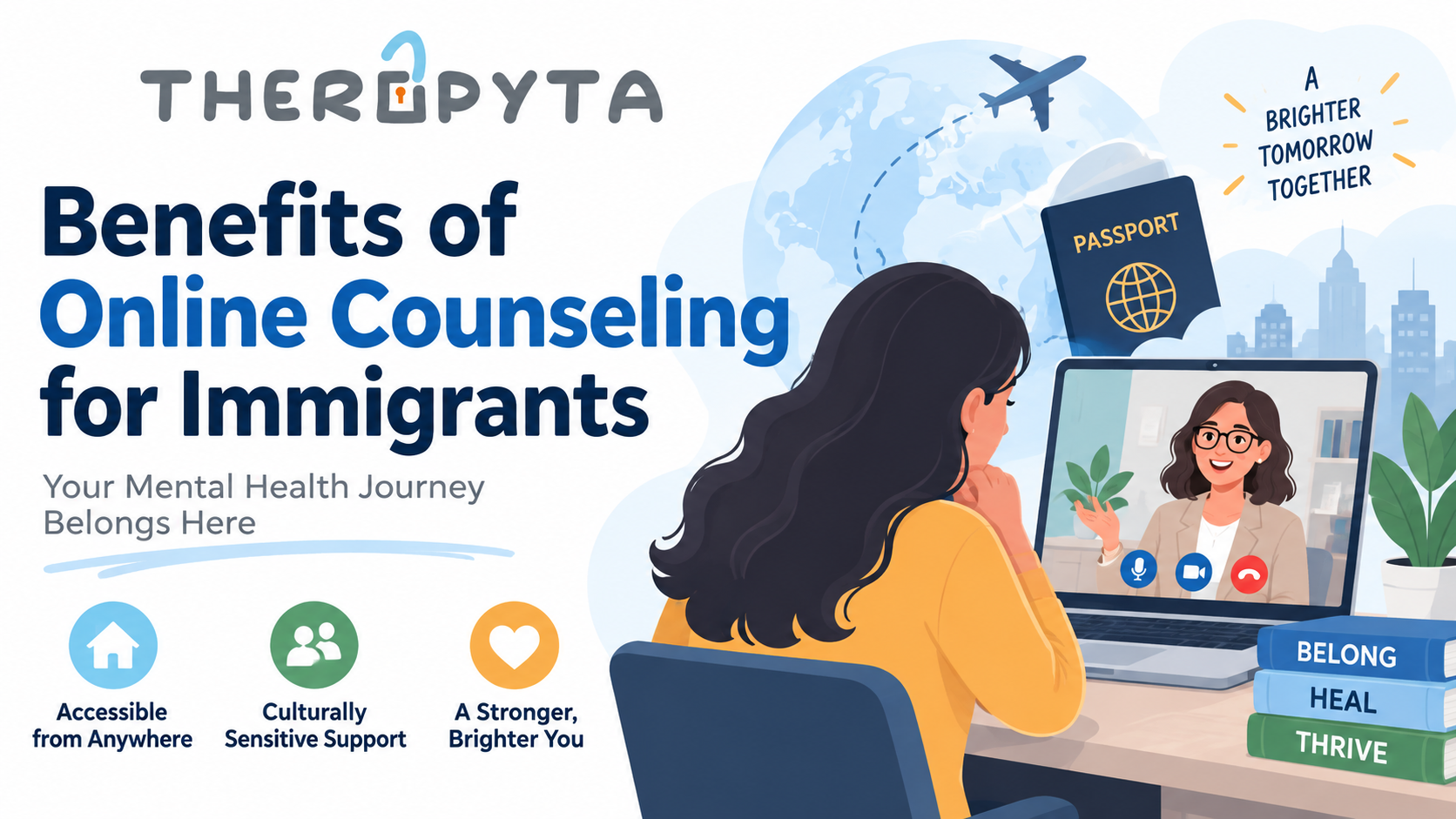
Online counseling, also known as teletherapy, virtual counseling, or digital psychotherapy, refers to the provision of psychological and psychiatric services through digital platforms and the internet. In this method, clients can connect with their counselor or psychologist without the need for physical presence, through video calls, audio calls, text messaging, or even email, and receive the services they need.
The online counseling process typically begins with registration on a specialized platform and completing initial questionnaires. Then, based on their needs and preferences, the client selects a counselor or psychologist with appropriate expertise and experience in the relevant field. Counseling sessions are held at agreed-upon times, and the client can participate from anywhere with internet access. One of the important advantages of online counseling is its high flexibility. Clients can schedule sessions according to their own timetable and increase or decrease the number of sessions as needed. Many online counseling platforms also provide text-based communication with the counselor between sessions, which can be very helpful when the client needs immediate support. Numerous studies have shown that online counseling is as effective as in-person counseling and, in some cases, due to greater convenience and reduced psychological barriers, can even yield better results. This approach is an ideal solution, especially for immigrants facing multiple barriers to in-person counseling, and can play an important role in improving mental health and quality of life.
3. Access to Persian-Speaking Counselors; A Bridge to Deeper Understanding
One of the biggest and most important benefits of online counseling for Iranian immigrants is the ability to access Persian-speaking counselors and psychologists. For many of us, Persian is not just a means of communication but a carrier of our culture, history, memories, and identity. Many emotional concepts, subtle feelings, and deep human experiences are rooted in our mother tongue, and translating them into another language often results in a loss of meaning and depth.
When an Iranian immigrant speaks with a Persian-speaking counselor, they don't need to mentally translate their feelings. They can talk about their deepest concerns in the same language they think in, dream in, and understand their sorrows in. This not only makes the expression process easier but also allows the counselor to better understand the client's cultural and social context and provide more effective help. A counselor familiar with Iranian culture, family values, immigration-related concerns, and the specific challenges of Iranians abroad can empathize more deeply with their client and offer solutions that are more compatible with their cultural background and real life.
Furthermore, speaking Persian is itself a therapeutic element. For many immigrants, a Persian-language counseling session creates a familiar and intimate space where they feel more secure and at ease. This space allows them to speak about their feelings more openly and freely, and this openness is itself one of the most important factors for success in the therapeutic process. Platforms like therapyta, which specialize in providing Persian-language counseling services for Iranians abroad, have made it possible for immigrants anywhere in the world to access experienced Persian-speaking counselors and, through this, receive the psychological support they need more deeply and effectively.
4. Time and Location Flexibility; Counseling Anywhere in the World
Another outstanding benefit of online counseling for immigrants is its unparalleled flexibility in terms of time and location. Immigrants often face busy and variable schedules. Long working hours, family responsibilities, and sometimes time differences with their home country can all make scheduling in-person counseling sessions a major challenge. But online counseling removes these limitations. Clients can schedule their counseling sessions at any time of day or night that suits them. This flexibility is especially valuable for those with irregular work shifts or those living in different time zones from their counselor.
On the other hand, online counseling eliminates the need for physical presence at a clinic or counseling center. The client can connect with their counselor from home, work, or even while traveling. This is a major advantage, especially for immigrants living in remote areas or cities with limited access to psychological services. Also, those who cannot easily leave home for physical or psychological reasons, or those suffering from panic attacks or social anxiety, can benefit from therapeutic services in a safe and familiar environment. This feature makes online counseling an inclusive and accessible option for everyone.
Additionally, online counseling allows immigrants who have recently moved to a new country and are not yet familiar with the transportation system and various locations to have counseling sessions at home without the hassle of commuting. This can be particularly comforting in the early months of immigration, when the individual is facing numerous stresses, and can significantly reduce the psychological burden.
5. Cost Reduction and Economic Savings
The high cost of healthcare and psychological services in many host countries is one of the main barriers to receiving professional help for immigrants. In some countries, the cost of a single in-person counseling session can be prohibitive for many, especially in the early years of immigration when they face job and financial insecurity. Online counseling, by eliminating overhead costs such as office rent, commuting expenses, and other indirect costs, is generally significantly more affordable than in-person counseling.
This cost difference can be decisive for immigrants with limited budgets, enabling them to receive regular and consistent psychological services. In many cases, with the cost of one in-person session, one can receive several online counseling sessions. Online counseling also eliminates indirect costs—transportation to the clinic, parking, or even childcare costs during absence from home all disappear. This economic saving is especially important for families with multiple members needing psychological services. Cost reduction makes services accessible to a wider range of immigrants and allows them to prioritize their mental health without worrying about financial pressure.
6. Privacy Protection and Reducing Social Stigma
An important psychological barrier for many immigrants in seeking in-person counseling is concern about social stigma and judgment from others. In some cultures, visiting a psychologist or psychiatrist is still associated with a kind of taboo or social stigma, and many people fear being judged, blamed, or ridiculed if others find out they are seeing a counselor. This concern can be especially intense in small communities or communities where people of the same culture interact. Online counseling, by providing a private and confidential platform, significantly reduces this concern. Clients can have counseling sessions from their own home, without needing to be present in public places, and no one will be aware of it.
This confidentiality allows people to seek help with greater peace of mind and discuss personal and sensitive issues without fear of others' judgment. Privacy in online counseling includes not only the location of sessions but also the registration process, payments, and communications between sessions. Reputable online counseling platforms use advanced security protocols to protect client information, and all communications are encrypted. This reassures clients that their personal information remains completely confidential. For immigrants who, due to their life or work circumstances, are concerned about the confidentiality of their information, online counseling can be an ideal choice and encourage them to seek professional help.
7. Psychological Support in Crisis and Emergency Situations
Living in a new country may involve unexpected crises. Job loss, illness, death of a loved one in Iran, political crises and war, internet shutdowns and loss of contact with family—all can create critical situations in which the individual needs immediate psychological support. In such situations, access to an in-person counselor may not be possible quickly, especially if the crisis occurs outside working hours or during holidays. Online counseling, by providing the possibility of immediate connection with a counselor, can meet these emergency needs. Many online counseling platforms offer text-based communication or emergency call options for their clients to use during crises.
Furthermore, for immigrants living in areas with limited access to psychological services, online counseling may be the only way to receive psychological support during a crisis. Also, when an immigrant cannot leave home due to physical or psychological issues, online counseling enables them to receive help without physical presence. This feature is doubly important during pandemics or emergencies when movement is restricted. Platforms like therapyta, by offering 24/7 services and the ability to connect with a counselor at any time, reassure immigrants that they are not alone in times of crisis and can quickly access the support they need.
8. Diversity of Services and Therapeutic Approaches
Another notable benefit of online counseling is the wide diversity of services and therapeutic approaches available. Online counseling platforms typically cover a broad range of services, including individual psychotherapy, couples therapy, family therapy, career and academic counseling, pharmaceutical consultation, and even more specialized services like speech therapy or counseling for specific disorders. This diversity allows clients to choose the appropriate service based on their specific needs.
In addition to service diversity, various therapeutic approaches are also available through online counseling—from Cognitive-Behavioral Therapy and Acceptance and Commitment Therapy to Psychodynamic Therapy, Interpersonal Therapy, and Mindfulness-Based Therapy, all can be delivered in the online format. Clients can discuss the appropriate therapeutic approach with their counselor and choose the best method based on their preferences and needs. Some platforms also offer hybrid services where clients can benefit from a combination of different methods. Online counseling also provides access to specialists in specific areas who may not be easily available in the host city or country. For immigrants seeking more specialized treatments, this feature can be especially valuable.
9. Therapyta; Specialized Support for Iranian Immigrants
Therapyta, as the first comprehensive health-oriented platform specifically for Iranians abroad, with a deep understanding of the psychological challenges of immigrants, provides a safe, professional, and accessible environment for counseling and psychotherapy services to Iranians anywhere in the world. Leveraging over 20 years of experience in counseling and psychology with Iranians living abroad, and a team of experienced physicians, psychologists, and psychiatrists who themselves have experienced immigration and life abroad, Therapyta has been able to design its services purposefully and tailored to the specific needs of immigrants.
All counselors active on therapyta hold official licenses from the Psychological System Organization, and their credentials are thoroughly verified before collaboration, ensuring users can benefit from their expertise with complete confidence. Therapyta's services include psychological and psychiatric counseling, academic and career counseling, pharmaceutical consultation, guidance for cultural adaptation and lifestyle, and speech therapy—all delivered online through video, audio, or text. In addition, by offering e-books, specialized webinars, and group therapy sessions, Therapyta provides a comprehensive platform for improving mental health and personal growth of immigrants. Time and location flexibility, privacy protection, affordable costs, and access to Persian-speaking counselors are among the features that make Therapyta an ideal choice for Iranians abroad. Therapyta has been and is by your side to make immigration not a crisis but a sweet experience for growth.
10. Conclusion
Immigration, with all its opportunities and challenges, can have profound effects on individuals' mental health. Pressures from adapting to a new environment, longing for family and homeland, economic concerns, and identity crises are all factors that can lead to anxiety, depression, and reduced quality of life. However, numerous barriers—such as lack of Persian-language counseling resources, high costs, time and geographical limitations, and social stigma—deprive many immigrants of professional help. Online counseling, as an innovative and effective solution, has removed many of these barriers and made access to psychological services easier for immigrants. From access to Persian-speaking counselors and time-location flexibility to cost reduction and privacy protection, these are all benefits that make online counseling an ideal option for immigrants. Specialized platforms like therapyta, by offering diverse and high-quality services and specialized support along this journey, play an important role in improving the mental health and quality of life of Iranian immigrants. Remember that taking care of your mental health is not only a right but a necessity, and online counseling has made this right accessible to everyone, wherever they are.

 (1).jpg)
 (Website) (3).jpg)